How the GameLab explores the world of video games
22 April 2026

The GameLab was established to offer researchers and students a place where video games can be studied in a critical and analytical way. According to co-founder and coordinator Toni Pape, the lab has developed significantly in recent years. 'Where we initially focused mainly on researchers within the faculty, we are now consciously committed to interdisciplinary collaboration. We want to study games from different perspectives and actively seek cooperation with other disciplines.'
Gaming literacy
This multidisciplinary approach is clearly visible in the projects taking place within the lab. Researchers engage with a wide range of themes: from heritage and education to technology and identity. For example, literary scholar Claire Stocks developed an application together with heritage partners in which players can explore a historical environment from Roman times. At the same time, Irene van Driel studies how games influence the identity formation of children and young adults. On the technical side, work is being done on game design and innovative applications such as virtual reality interfaces.
What connects these diverse projects is the concept of gaming literacy. 'This refers to the fundamental skills and knowledge you need in order to play games,' Pape explains. 'Think of implicit rules, such as the idea that you often have to follow the light, that game worlds have boundaries, but also basic skills such as using a controller. Our goal is to strengthen literacy around games to foster healthy play behavior and an awareness of how technological, economic and social factors shape the games people play.'
Game jams
In addition to research, collaboration with external partners also plays an important role. For instance, the lab is exploring possible contributions to an exhibition on games at NEMO Science Museum. There are also initiatives such as so-called game jams, in which participants develop games in a short period of time around a specific theme. Researcher Karla Zavala Barreda, for example, organised an international game jam on climate justice, in collaboration with partners in South Africa.
Within these kinds of projects, attention is also paid to the cultural assumptions embedded in games. Many games are still based on Western or even colonial ways of thinking, in which exploration and conquest take centre stage. The question researchers ask is how you can design games, and game jams, that break through these patterns. In this way, a more decolonial approach to game design emerges, in which other perspectives and forms of play take centre stage.
Societal trends
However, the GameLab does not only look at the content of games, but also at broader societal trends. Pape himself currently studies so-called gameplay loops: repetitive gameplay patterns in which players repeat again and again in order to improve. But in today’s mature gaming culture, games also critically reflect on their core design element of the gameplay loop, for instance by trying to “break the loops” they create. An example is the currently popular roguelike genre. According to Pape, this may reflect a broader cultural development. 'We live in a time that promotes self-optimisation and continuous improvement. Roguelikes are a curious genre that often foster self-optimization in the gameplay while questioning and resisting it in the narrative. I'm interested in how does such mixed messaging impacts gaming literacy.'
Students are also playing an increasingly important role in this field of research. More and more often, they choose games as the topic of their dissertations. They may, for example, focus on mobile games such as Genshin Impact or League of Legends: Wild Rift, critically analysing how business models, narratives and player communities are interconnected.
According to Pape, this growing interest shows how important gaming has become within contemporary culture. 'Games are no longer just entertainment, but form a complex ecosystem in which technology, economics and social interaction come together.' The Game Lab studies these relations to understand how (digital) games shape culture and society.
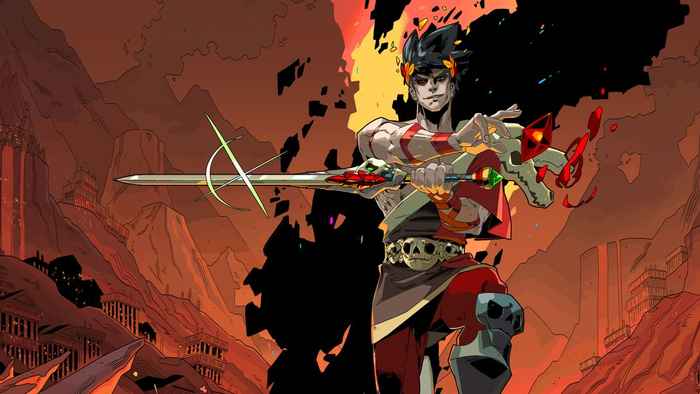
One of the most popular roguelike games at the moment is Hades. The player takes on the role of Zagreus, the son of the god of the Greek Underworld. Zagreus has had enough of the gloomy Underworld and has a single goal: to reach the surface and find his mother.
The path upwards is constantly changing. Each escape attempt takes you through new rooms filled with monsters and traps, and with every run you gain new powers. As in many other games in this genre, dying in Hades does not mean 'game over'. You return each time to your father’s palace, where you use the resources you have collected to make yourself permanently stronger for the next attempt.