Breath and Soul in Transit: The Art of Rukai Artist Eleng Luluan
- Date
- 7 November 2025
- Time
- 11:00 -14:00
- Location
- Oudemanhuispoort
- Room
- OMHP D1.18D
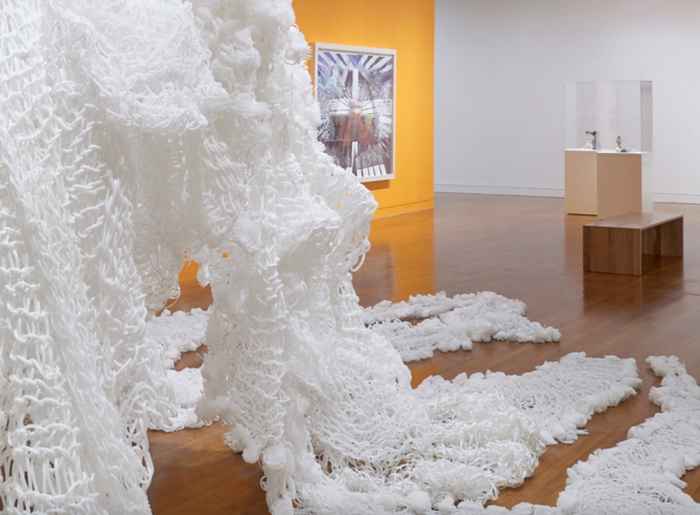
Messages of the Wind in Lupakatj
Why do we have winds?
This wind comes from heaven, a force of nature.
This wind gives us strength. It transforms our land, reshapes our forests.
Look at the riverbanks of our land, they've changed so much.
This wind is truly powerful.
We humans can never match the might of nature.
Where does this wind come from?
The elders say, "We don’t know."
This wind belongs to nature; it is the wind’s work.
If there were no wind, how could we labor?
How would we transform our land?
The meaning of the wind is this: We humans can not overcome it.
We heed to the message of the wind.
———————-Rukui Lasakasa
This workshop is part of the Cosmologies workgroup (see: https://asca.uva.nl/programme/seminars/cosmologies/cosmologies.html). This event is an exploration into the multiplicity of cosmologies and in specific Indigenous ontologies the world engenders. In this workshop, Prof. Dr. Ching-yeh Hsu will present Rukai traditions and indigenous artist Eleng Luluan’s practices. The workshop will contain a screening of several videos on the work of Eleng Luluan, a talk by Prof. Dr. Hsu, a response, and finally an open conversation between all participants.
On Eleng Luluan, see:
Eleng Luluan is a Rukai artist, born in Kucapungane (Haocha Village) in Pingtung County, and relocated to the Dulan community in Taitung in 2002. Her work combines delicate weaving techniques with a dynamic spatial sensibility, utilising natural and unrefined materials with a focus on driftwood, plant fibers, and other organic media. For Luluan, the principles of wabacabacas — where the movement of the hand embodies thoughts, beliefs, history and culture — and the practice of interweaving voices from her community are central to building cultural resilience to sustain the community into an uncertain future.
On Rukai culture, see:
The Rukai are one of sixteen Taiwan’s Indigenous peoples, traditionally residing in the mountainous regions of Pingtung, Kaohsiung, and Taitung. Known for their social structure, oral traditions, and refined artistry, Rukai culture is deeply tied to land, ancestry, and nature. Their architecture, weaving, and woodcarving embody spiritual and communal values, while the hundred-pace viper and lily serve as important cultural symbols for nobility and purity. Rituals, songs, and oral histories continue to sustain their identity, reflecting a worldview that honors balance, respect, and the sacred relationship between people and the natural environment.
Dr. Ching-yeh Hsu is an art historian and a visual cultures critic. She graduated from the art and art history department at the University of Iowa and majored in modern art and contemporary art. She is a professor in the visual arts department at the University of Taipei in Taiwan. She first encountered the Indigenous contemporary artists of Taiwan’s Taitung and Hwaliang provinces in 2003 and began writing about the aesthetic, mythology, and human condition of Taiwanese Indigenous art. She regards such art not only as a function of ritual, but also as a bridge between art and life. Taiwanese Indigenous art’s intuitive and affective qualities have nurtured her inner strength and helped her rediscover what Gilles Deleuze calls the “immanence” of nature and art.
For the workshop, participants are asked to read the supplied reading in advance.
Reading:
Hsu, Ching-yeh. “Rhizome as Polyphonic Indigeneity: The Frottage, Scanned Images and Installation of Eleng Luluan’s Art” In Taiwanese Indigenous Contemporary Art: Polyphony and Mipaliw. Volume10, Issue 1, 2023.
To register for the workshop and, email: h.h.kuipers@uva.nl
Workshop organized by Xinyi Zheng and Halbe Kuipers
