Dissertation Defense: Jasmijn Leeuwenkamp
- Date
- 1 July 2026
- Time
- 13:00
- Location
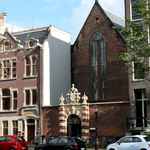
- Agnietenkapel
This dissertation examines a fundamental tension between legal environmentalist strategies modeled on human rights and the anthropocentric framework underlying those rights. The dissertation asks whether non-anthropocentric approaches to rights can be reconciled with perspectives that reject the Nature/Culture divide in favor of a situated account of more-than-human relationality. Drawing on critical legal theory, posthumanism, philosophy, and anthropology, I argue that liberal rights ultimately cannot accommodate a relational understanding of humans as co-constitutive parts of more-than-human worlds. I critically examine three legal cases: Urgenda, rights of nature cases in Ecuador and New Zealand, and Ecocide. I show how these legal approaches, albeit in different ways, largely remain within a liberal rights framework and therefore leave intact the Modern mode of organizing the world which is incompatible with posthumanist and nonmodern accounts centered on more-than-human relationality and responsibility. The premise that I elaborate in this dissertation is that such a relational account can only be conceptualized and enacted upon by interrogating the philosophical limits of a property- and rights-centered framework that is fundamentally grounded in the Nature/Culture divide. In contrast to the certainty of rights, a relational perspective acknowledges the evitable and inevitable harm that comes with living and dying with more-than-human others and attunes us to accountability for those messy relations. (210 woorden)